Abdominal Aortic Aneurysm (AAA): The Silent Vascular Condition You Cannot Feel

Jul 09, 2026

An abdominal aortic aneurysm, often shortened to AAA, is one of the more dangerous vascular conditions precisely because it usually gives no warning. Many people live with one for years without knowing, and the first sign can be a life-threatening emergency. The good news is that when an AAA is found early, it can be monitored and treated safely. This guide explains what an AAA is, who is at risk, and why screening matters.
What Is an Abdominal Aortic Aneurysm?
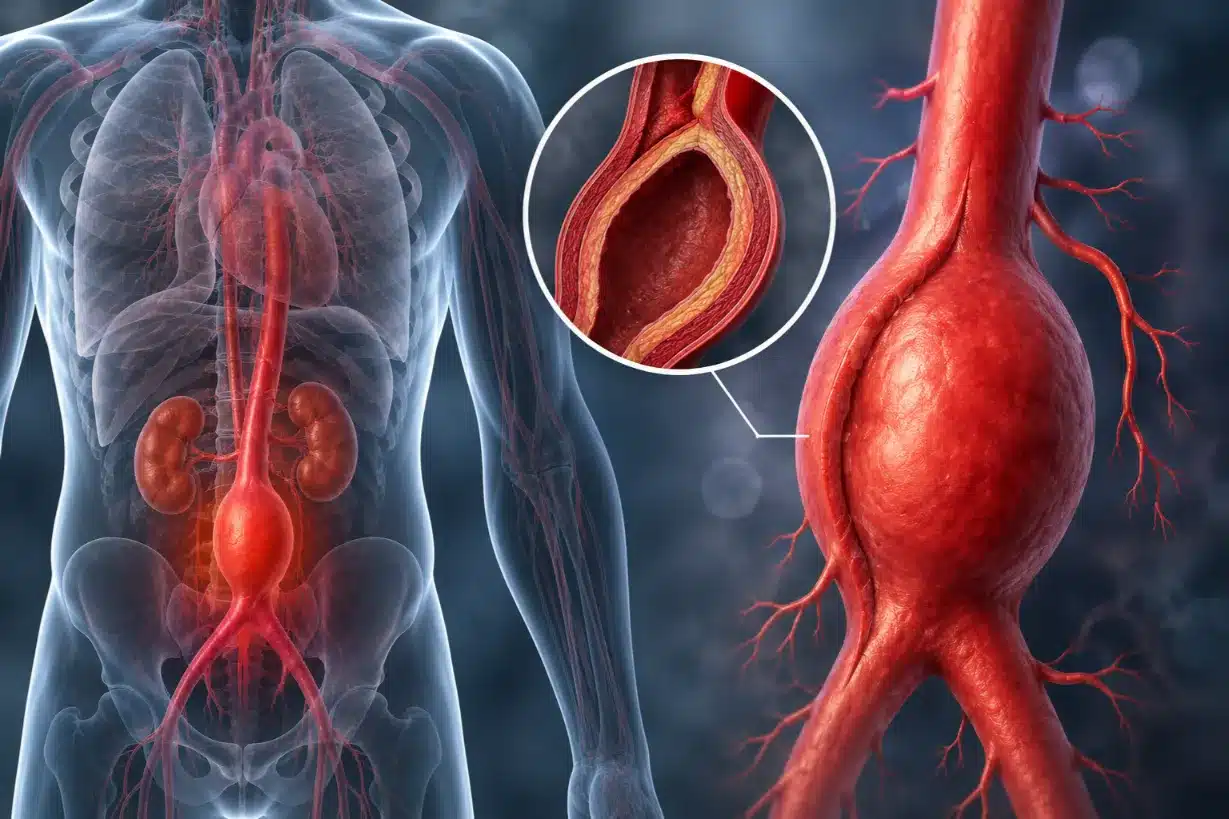
The aorta is the largest blood vessel in the body. It carries blood from the heart down through the chest and abdomen to supply the rest of the body. An aneurysm is a bulge that forms when a section of the artery wall weakens and stretches outward. When this happens in the part of the aorta that runs through the abdomen, it is called an abdominal aortic aneurysm.
As the bulge grows, the wall becomes thinner and weaker. If it stretches too far, it can tear or burst. A ruptured aneurysm causes sudden, severe internal bleeding and is a medical emergency that can be fatal within minutes. This is why an AAA is often described as a silent threat.
Why an AAA Is So Often Silent
Most abdominal aortic aneurysms cause no symptoms at all while they are small or moderate in size. They are frequently discovered by chance during a scan ordered for another reason. When symptoms do occur, they may include a deep, constant ache in the abdomen or lower back, or a pulsing or throbbing sensation in the belly. Because these signs are easy to overlook, many aneurysms go undetected until they become large.
Who Is at Risk?
Some people are far more likely to develop an AAA than others. The most important risk factors are:
- Smoking. This is the single strongest risk factor. The large majority of people with an AAA have a history of smoking, and smoking also increases the risk that an aneurysm will rupture.
- Age. The risk rises with age and is highest in people over 65.
- Being male. Men develop abdominal aortic aneurysms several times more often than women.
- Family history. Having a close relative with an aneurysm increases your own risk.
- High blood pressure. Long-standing hypertension puts extra strain on the artery wall.
- Atherosclerosis. Hardening and narrowing of the arteries from fatty deposits also raises the risk.
Why Screening Matters
Because an AAA is usually silent, screening is the most reliable way to catch one before it becomes dangerous. Screening is done with a simple abdominal ultrasound scan. It is quick, painless, involves no needles or radiation, and gives an accurate measurement of the aorta.
Screening is particularly worthwhile for men aged 65 and above, especially those who have ever smoked, and for anyone with a family history of aneurysm. If you fall into a higher-risk group, it is worth asking a vascular doctor in Singapore whether a screening scan is appropriate for you.
How Is an Abdominal Aortic Aneurysm Treated?
Treatment depends mainly on the size of the aneurysm and how quickly it is growing. The risk of rupture rises significantly as the aneurysm enlarges, so the aim is to repair it before that risk becomes too high while avoiding unnecessary surgery for small, stable aneurysms.
Monitoring (Surveillance)
Small aneurysms are usually watched rather than operated on. Your vascular specialist will arrange regular ultrasound scans to track the size over time. Smaller aneurysms are checked less often, and the interval shortens as the aneurysm grows. Controlling blood pressure and stopping smoking are important during this period to slow growth.
Surgical Repair
When an aneurysm reaches a size at which the risk of rupture outweighs the risk of surgery, repair is recommended. For many patients this threshold is around 5.5 centimetres, though it may be lower in women or when an aneurysm is growing rapidly or causing symptoms. There are two main approaches:
- Endovascular aneurysm repair (EVAR). A stent graft is guided into the aorta through small incisions in the groin and positioned to reinforce the weakened section from the inside. This minimally invasive approach often means a shorter hospital stay and faster recovery.
- Open surgical repair. Through an incision in the abdomen, the surgeon replaces the weakened section of the aorta with a synthetic graft. This is a more major operation but remains an important option for certain patients and anatomies.
Your surgeon will recommend the most suitable approach based on the size and shape of the aneurysm, its location, and your overall health.
When to Seek Emergency Help
A ruptured or rapidly expanding aneurysm is a medical emergency. Call for emergency help immediately if you experience sudden, severe pain in the abdomen or lower back, especially if it is accompanied by dizziness, a racing heartbeat, clammy skin or fainting. Do not wait to see if the pain settles.
Frequently Asked Questions
Can an abdominal aortic aneurysm be cured without surgery?
Small aneurysms are not removed but are carefully monitored, and managing risk factors such as smoking and high blood pressure can help slow their growth. Surgery is reserved for aneurysms that reach a size where the risk of rupture is significant.
Is AAA screening painful?
No. Screening uses an ultrasound scan of the abdomen, which is painless and involves no needles or radiation.
Does an aneurysm always rupture?
No. Many aneurysms remain small and stable for years. The purpose of monitoring is to identify those that are growing so they can be repaired before rupture becomes likely.
Talk to a Vascular Doctor About Your Aorta
Because an abdominal aortic aneurysm rarely announces itself, awareness and timely screening are your best protection. If you are over 65, have ever smoked, or have a family history of aneurysm, a simple scan can offer real peace of mind.
The Vascular Vein and Wound Centre is a vascular clinic Singapore residents can rely on for aneurysm screening, monitoring and treatment. To arrange an assessment with a vascular specialist in Singapore, or a consultation with a vascular doctor in Singapore, contact the clinic by phone or WhatsApp.
This article is for general information and does not replace personalised medical advice. Please consult a qualified vascular doctor about your individual condition.