Dialysis Access Explained: AV Fistula, AV Graft and Catheter Options in Singapore

Jul 09, 2026

If you or a loved one is preparing to start haemodialysis, one of the first and most important steps is creating a reliable point of access to the bloodstream. This is known as dialysis access, or vascular access. Choosing and caring for the right type of access has a direct effect on how smoothly dialysis runs and how few complications you face over time.
This guide explains the three main types of dialysis access, how each one works, and the practical steps you can take to keep your access healthy. If you are looking for a vascular clinic in Singapore to discuss your options, understanding the basics first will help you ask the right questions.
Why Dialysis Needs Vascular Access
During haemodialysis, blood is gently drawn from your body, passed through a dialysis machine that filters out waste products and excess fluid, and then returned to you. To do this safely several times a week, the dialysis team needs a way to move a large volume of blood quickly and repeatedly. A normal vein in the arm is too small and too fragile for this, so a dedicated access point is created in advance.
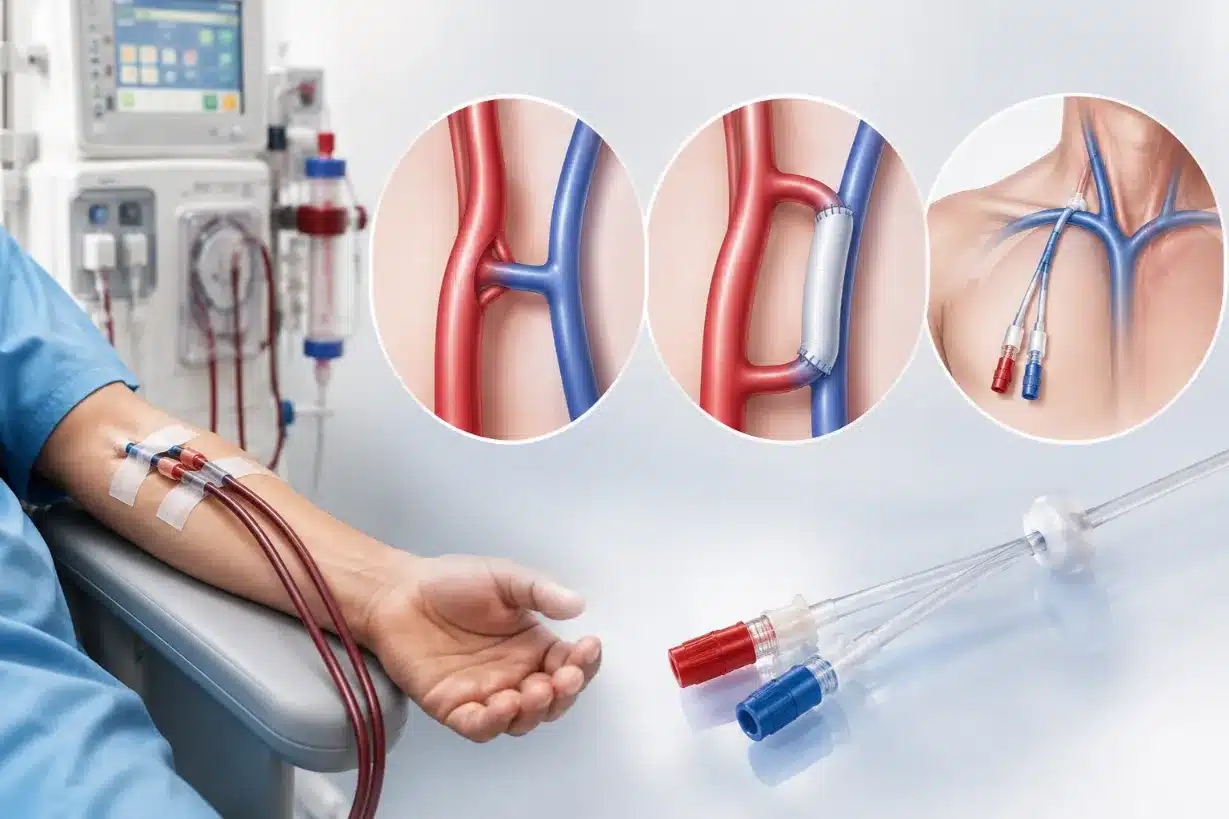
There are three main options: an arteriovenous (AV) fistula, an AV graft, and a central venous catheter. The best choice depends on your veins, your overall health, and how soon you need to begin dialysis. A vascular specialist in Singapore will assess your blood vessels, often using an ultrasound scan, before recommending an option.
AV Fistula: The Preferred Long-Term Option
An AV fistula is created by surgically joining an artery to a nearby vein, usually in the arm. Over time, the extra blood flow from the artery causes the vein to grow larger and stronger, which makes it suitable for the repeated needle insertions that dialysis requires. This growth process is called maturation.
A fistula is widely regarded as the gold standard for long-term dialysis because it is made entirely from your own tissue. This means it carries the lowest risk of infection and is less likely to develop clots than the other options. A well-functioning fistula can also last for many years.
The main trade-off is time. A fistula usually needs about six to twelve weeks to mature before it can be used, and in some patients full maturation takes several months. In a proportion of patients, particularly older patients or those with small or damaged veins, a fistula may fail to mature and a different approach is needed. For this reason, planning ahead and creating the fistula well before dialysis is expected to start is ideal.
AV Graft: A Faster Alternative
An AV graft connects an artery to a vein using a soft synthetic tube placed under the skin. Because the graft itself provides the surface for needle insertion, there is no need to wait for a vein to enlarge. A graft can typically be used sooner than a fistula, often within a few weeks of surgery.
Grafts are a practical choice when your own veins are not suitable for a fistula, or when dialysis needs to begin relatively quickly. The trade-off is that, because a graft uses artificial material, it carries a higher risk of clotting and infection than a fistula and may require more procedures over time to keep it working.
Central Venous Catheter: For Temporary or Urgent Use
A central venous catheter is a soft tube inserted into a large vein, usually in the neck or chest, with the ends sitting outside the body for connection to the dialysis machine. It can be used almost immediately, which makes it useful when dialysis must start urgently or while a fistula or graft is still maturing.
Because part of the catheter remains outside the body and sits inside a major vein, it carries the highest risk of infection of the three options and can, over time, cause narrowing or damage to the vein. For these reasons, catheters are generally regarded as a short-term or bridging solution rather than a permanent one.
How to Care for Your Dialysis Access
Looking after your access every day helps it last longer and reduces the chance of complications. For a fistula or graft, a few simple habits make a real difference:
- Feel for the thrill each day. A healthy fistula or graft has a gentle buzzing vibration called a thrill. Place your fingers over the access to check that it is present.
- Listen for the bruit. With a stethoscope, you should hear a soft whooshing sound. If the thrill or bruit becomes weaker, stronger, or disappears, contact your care team promptly as this can signal a clot or narrowing.
- Keep the access arm free. Avoid tight sleeves, watches or jewellery on that arm, and do not let anyone take blood pressure readings or draw blood from it.
- Protect it from pressure. Do not sleep on the access arm or carry heavy bags over it.
- Watch for infection. Redness, warmth, swelling, pain or any discharge at the site, especially with fever or chills, needs urgent medical attention.
- Keep it clean. Wash the area with soap and water, and keep the skin around your access clean and dry.
When to See a Vascular Doctor
Early planning leads to the best outcomes. If you have advanced kidney disease and dialysis is on the horizon, it is worth speaking to a vascular doctor in Singapore early, ideally months before dialysis is expected to begin. This allows time to assess your veins and create a fistula, which usually gives the best long-term results.
You should also seek prompt review if an existing access stops working normally, for example if the thrill disappears, the arm becomes swollen or painful, or you notice signs of infection. Acting quickly can often save the access and avoid a hospital admission.
Frequently Asked Questions
How long does an AV fistula take to be ready for dialysis?
Most fistulas need around six to twelve weeks to mature, and some take several months. Your vascular team will examine and scan the fistula to confirm it is ready before it is used.
Which dialysis access is best?
For most patients needing long-term dialysis, an AV fistula is preferred because it lasts longest and has the lowest risk of infection and clotting. However, the right choice depends on your veins, your health and how soon dialysis must start, which is why an individual assessment matters.
Is creating a fistula or graft a major operation?
Access surgery is usually a day procedure performed under local or regional anaesthesia. Your surgeon will explain what to expect and how to care for the wound afterwards.
Speak to a Vascular Specialist About Your Access
Reliable dialysis access is the foundation of safe, effective dialysis. If you would like to understand which option suits you and how to protect it, our team can assess your blood vessels and guide you through the process.
The Vascular Vein and Wound Centre is a vascular clinic Singapore patients can turn to for dialysis access planning and care. To book a consultation with a vascular specialist in Singapore, or to speak with a vascular doctor in Singapore, contact the clinic by phone or WhatsApp.
This article is for general information and does not replace personalised medical advice. Please consult a qualified vascular doctor about your individual condition.